

HHS and FCC Solicit Public Comments on Wireless Radiation Health & Environmental Effects
The U.S. Federal Communications Commission and the U.S. Department of Health and Human Sciences are seeking public comments on the health and environmental effects of wireless radiation exposure. Now is the time to make your voices heard.
As part of an unprecedented federal inquiry, the U.S. Department of Health and Human Services (“HHS”) is seeking public comments on the health and environmental effects of wireless radiation, gaps in existing scientific research on the subject, and whether the nation’s current approach to evaluating and protecting against wireless radiation exposures is sufficient. Critically, HHS is also asking whether the Federal Communication Commissions’ (“FCC”) existing RF exposure standards—which have not been updated in over 30 years—adequately account for the science and technology of today’s vastly expanded wireless environment. The HHS public comment period on this issue will close on October 21, 2026.
Through October 22, 2026, the FCC is also accepting public comments in a proceeding addressing RF exposure guidelines following a landmark decision in Environmental Health Trust, et al. v. FCC, 9 F.4th 893 (D.C. Cir. 2021). In a scorching opinion, the D.C. Circuit Court ruled that in the face of 25 years of new scientific evidence, the Commission had acted arbitrarily and capriciously by failing to provide a reasoned explanation for its determination that its 1996 guidelines continue to adequately protect against the harmful effects of exposure to wireless radiation to children, the environment, and to health issues or diseases unrelated to cancer. (9 F.4th at 900.) The D.C. Circuit Court remanded the matter to the FCC to reconsider the adequacy of its 1996 guidelines with respect to those issues.
These two federal proceedings are particularly significant for people experiencing Electromagnetic Radiation Syndrome (EMR-S), many of whom report debilitating symptoms linked to wireless radiation exposure. While neither proceeding guarantees changes to federal policy or establishes that wireless radiation causes particular health conditions, public participation can help shape the questions federal agencies investigate and research priorities.
If you or someone you know has experienced symptoms from wireless radiation exposure or other electromagnetic fields, it is vital that you submit a comment to HHS and to the FCC. Healthcare professionals, researchers, and concerned members of the public are also encouraged to participate. Now is the moment to make your voice heard.
Please note that you only need to write one comment which you can submit to both HHS and the FCC. If you have difficulty submitting your comment to either HHS, the FCC, or both agencies, please do not hesitate to reach out to us for assistance.
**
To read HHS’s full “Request for Information” from the public, click here. To submit your comment to HHS, click here.
**
Follow the instructions below to submit your comment to the FCC:
Make your choice of what type of comment to file. The FCC prefers “standard filings” but does accept informal “express” submissions. Standard filings require that you upload a document in pdf or other acceptable format, whereas with express comments you can directly enter the text using your browser.
Enter your name, address and email address (optional) in the appropriate fields.
Please submit a personalized comment about how wireless radiation exposure has impacted you and your family. You can start with the suggested text below and then personalize it. You may wish to write your comment in advance elsewhere.
Check the box that says Note: By checking this box, I acknowledge that I am filing a document into an official FCC proceeding. All information submitted, including names and addresses, will be publicly available via the web. Privacy Act Statement.
Select Continue to Review Screen.
Check the box that says I’m not a robot.
Click Submit.
Tahoe Regional Planning Agency Takes Landmark Action to Curb Plastic Pollution From “Monopine” Cell Towers
New Lake Tahoe rules target plastic camouflage materials on cell towers that shed prodigious amounts of debris into soil and waterways.
LAKE TAHOE, Calif./Nev. — After more than five years of pro bono litigation and advocacy by attorneys Robert J. Berg and Julian Gresser, CEO of the Broadband International Legal Action Network, with support from Lake Tahoe residents, environmental advocates, and legal volunteers, the Tahoe Regional Planning Agency (“TRPA”) has adopted new rules addressing plastic pollution from “monopine” cell towers, setting a new regulatory standard for these faux-tree structures in the Lake Tahoe Basin.
Effective August 24, 2026, amendments to Chapter 36 of the TRPA Code of Ordinances discourages the use of plastic screening materials on cell towers and require additional documentation, monitoring, maintenance, and corrective-action requirements when such materials are used.
The rules were forged through constructive discussions between TRPA and plaintiffs in federal litigation challenging approval of a proposed monopine near Heavenly Valley in South Lake Tahoe. The litigation was ultimately resolved with TRPA’s adoption of the new environmental protections.
The High Environmental Cost of Monopine Towers.
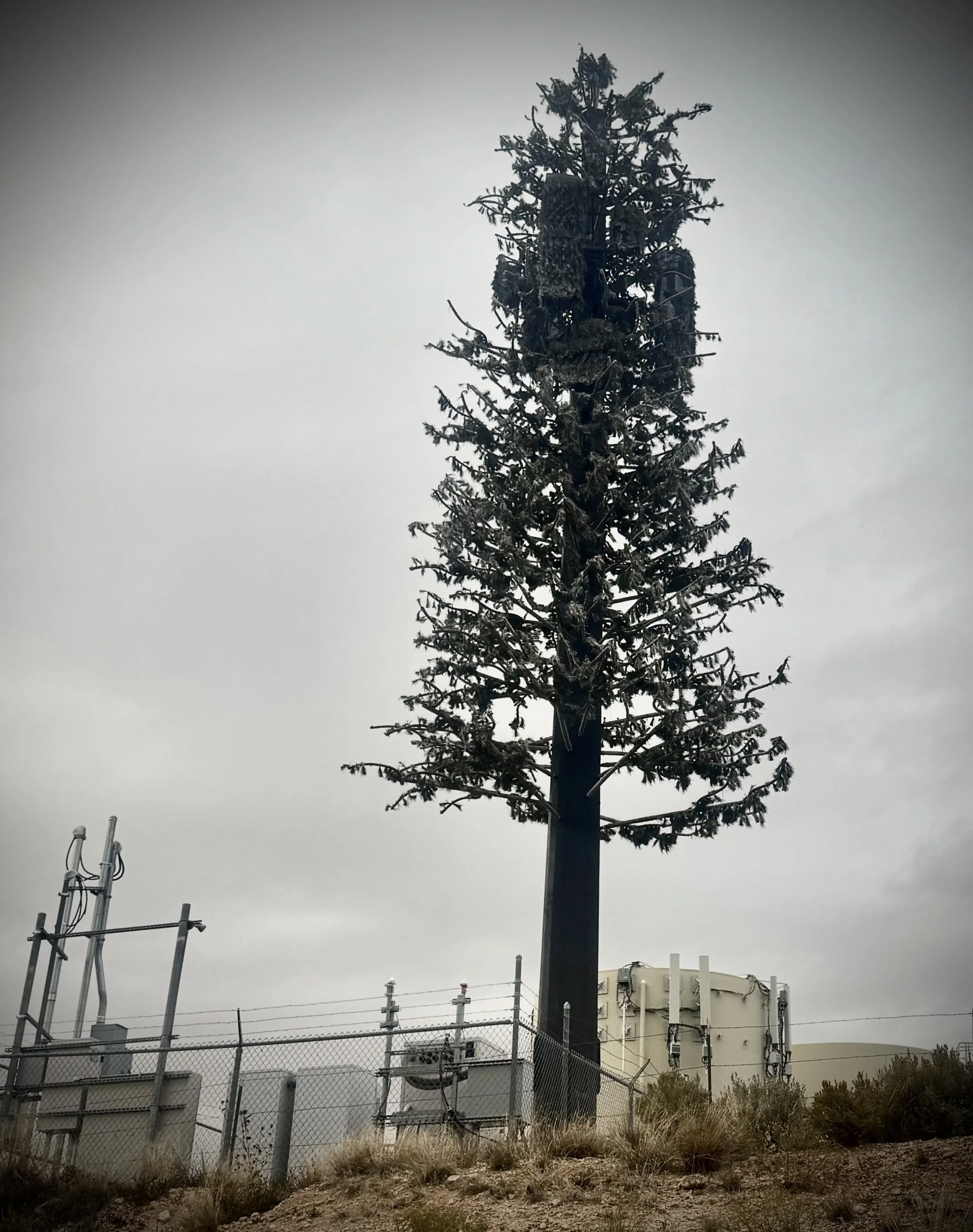
Monopines are cell towers “dressed up” to resemble pine trees. Their artificial needles are typically made from PVC plastic, while their branches are made from fiberglass-reinforced plastic. A single 110-foot-tall monopine can contain thousands of pounds of these materials.
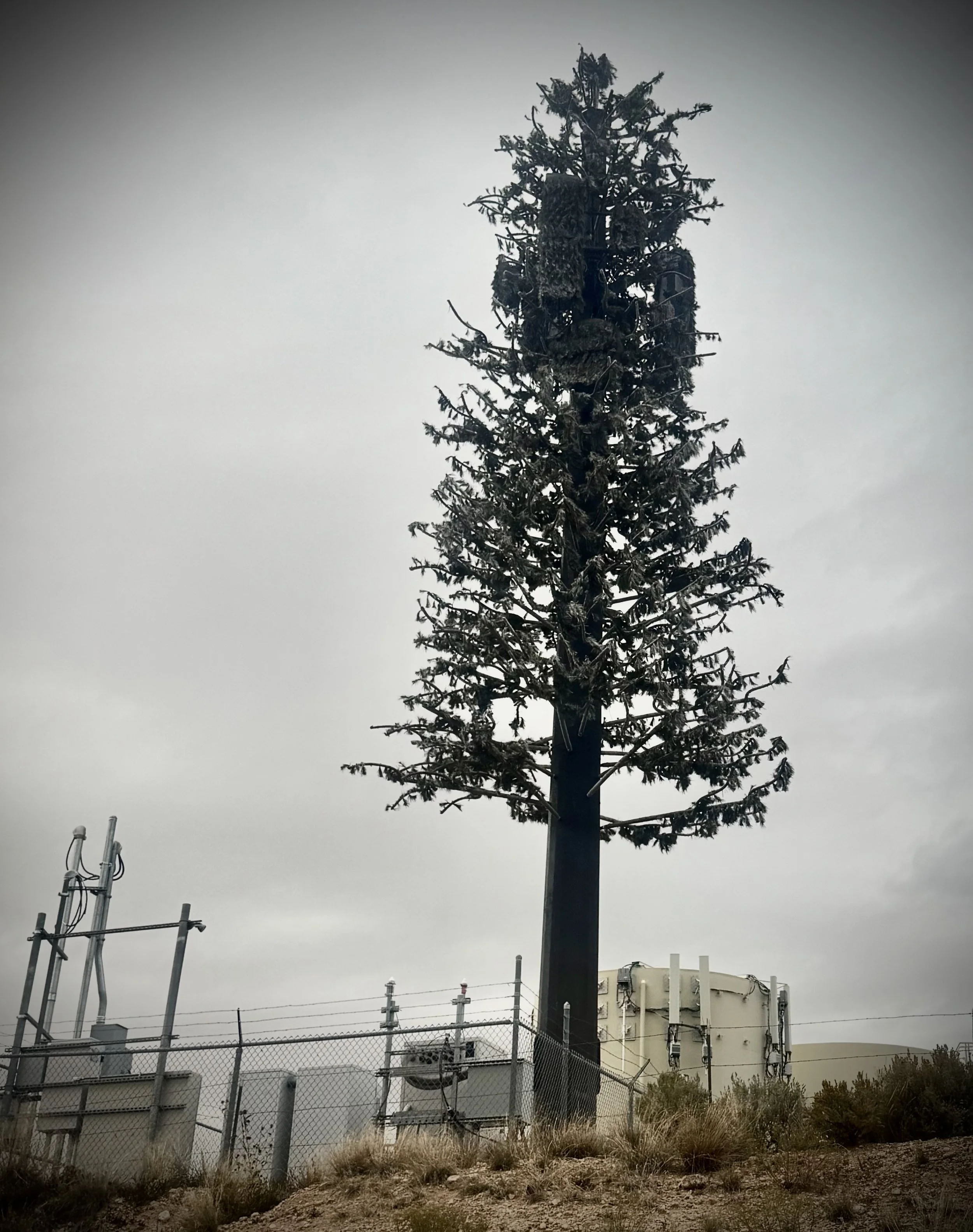
Example of a monopine cell tower.
Exposure to ultraviolet radiation from the Sun, wind, snow, ice and large temperature swings causes the PVC plastic and fiberglass-reinforced plastic to deteriorate and detach from the structure. Fragments can migrate into surrounding soil, drainage systems, and waterways.
Beginning in 2021, Lake Tahoe residents began documenting widespread plastic debris at the base of monopine cell towers around the Lake Tahoe Basin. In recommending the newly adopted amendments, TRPA staff acknowledged this plastic pollution, citing the “long-term durability” of plastic screening materials and their “potential deterioration under Basin climatic conditions, and their potential to generate plastic debris over time.”
“This totally avoidable plastic pollution problem was hiding in plain sight,” said attorney Robert J. Berg, co-counsel in the federal litigation. “Communities required these towers because they believed artificial trees would protect scenic views. But when the plastic camouflage degrades and disperses into the surrounding environment, the supposed solution creates an environmental dilemma of its own.”
The issue has particular significance at Lake Tahoe, where microplastic pollution is already a growing environmental threat. Research comparing 38 freshwater lakes and reservoirs worldwide has reported unusually high concentrations of microplastics in Lake Tahoe. Microplastic scientists at Columbia University’s Lamont-Doherty Earth Observatory have also confirmed that deteriorating monopine cell tower materials can contribute to the Basin’s plastic pollution burden.
“The significance of TRPA’s actions extends beyond monopines,” said attorney Julian Gresser. “At a time of deep public polarization, this shows what is possible when citizens, lawyers, and government come together to rally around a shared purpose: protecting an extraordinary environmental treasure and finding practical policy solutions to real problems.”
A Potential Model for Communities Nationwide: A Meaningful, Replicable Environmental Policy Victory
The TRPA’s new approach does not impose an outright ban on monopine cell towers. Rather, the ordinance "expresses a policy preference against reliance on Plastic Screening Material where practicable, encourages applicants to consider alternative designs, and establishes additional documentation, monitoring, maintenance, and corrective-action requirements where such materials are proposed or used."
This balanced approach offers a replicable model for municipalities seeking to protect scenic resources, accommodate wireless telecommunications infrastructure, and reduce avoidable plastic pollution.
“The TRPA has demonstrated that plastic shedding from faux-tree towers is an environmental issue that regulators can and should address,” Berg said. “Local governments should require greater scrutiny, stronger safeguards, and more responsible design standards for all wireless telecommunications facilities.”
Advocates hope TRPA’s action will inspire policymakers nationwide to take a similarly thoughtful approach to monopine and other faux-tree cell towers, reducing avoidable plastic contamination of soil and water.
For more information about this environmental policy victory, or to request an interview, please contact Robert J. Berg at robertbergesq@aol.com or Julian Gresser at juliangresser77@gmail.com. Additional background information is available here.
FCC Seeks to Erode State and Local Zoning Control Over Cell Tower Siting
The FCC adopted a Notice of Proposed Rulemaking ("NPRM") (WT Docket No. 25-276) on September 30, 2025. The NPRM was published in the Federal Register on December 1, 2025. Comments to the NPRM due on December 31, 2025. Reply comments are due on January 15, 2025. Comments can be submitted through the FCC's electronic comment filing system.
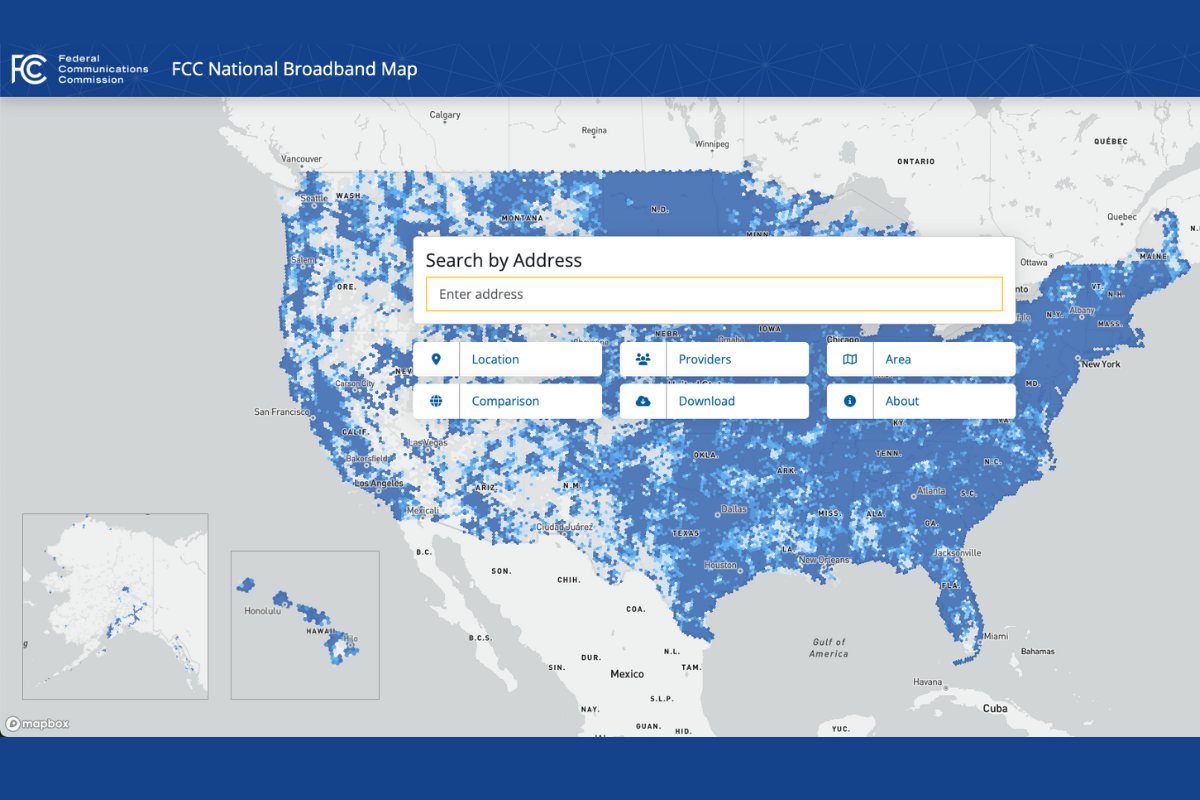
The purpose of 25-276 is to severely erode local control over the siting of wireless telecommunications equipment buildouts, particularly macro cell towers. Sadly, the FCC views local governments as burdensome impediments to wireless infrastructure deployment. Meanwhile, the vast majority of populated areas in the United States already have 100% wireless coverage and are inundated with cell towers and wireless antennas (as evidenced by the FCC's National Broadband Map). So, clearly, local governments can't be much of an impediment!
Cell Tower Developers ‘Lying’ About Coverage Gaps to Push New Towers, Lawyer Says
The FCC National Broadband Map is a free, publicly-available tool that depicts available cell coverage down to the street address level anywhere in the United States.
On September 18, 2025, Dr. Suzanne Burdock published an article in The Defender titled, “Cell Tower Developers ‘Lying About Coverage Gaps to Push New Towers,’ Lawyer Says.” The attorney referenced in the article is telecommunications lawyer Robert Berg.
As Berg explains in the article, cell tower developers frequently claim that new wireless facilities are necessary to address alleged coverage gaps—even in areas where service is already robust. However, the Federal Communications Commission’s (FCC) National Broadband Map provides detailed, real-world service data and often shows that proposed tower sites already have adequate coverage. Rather than relying on this authoritative data, developers commonly submit their own computer-generated, theoretical radio-frequency propagation maps, which can exaggerate or misrepresent coverage gaps in order to obtain local permits and approvals.
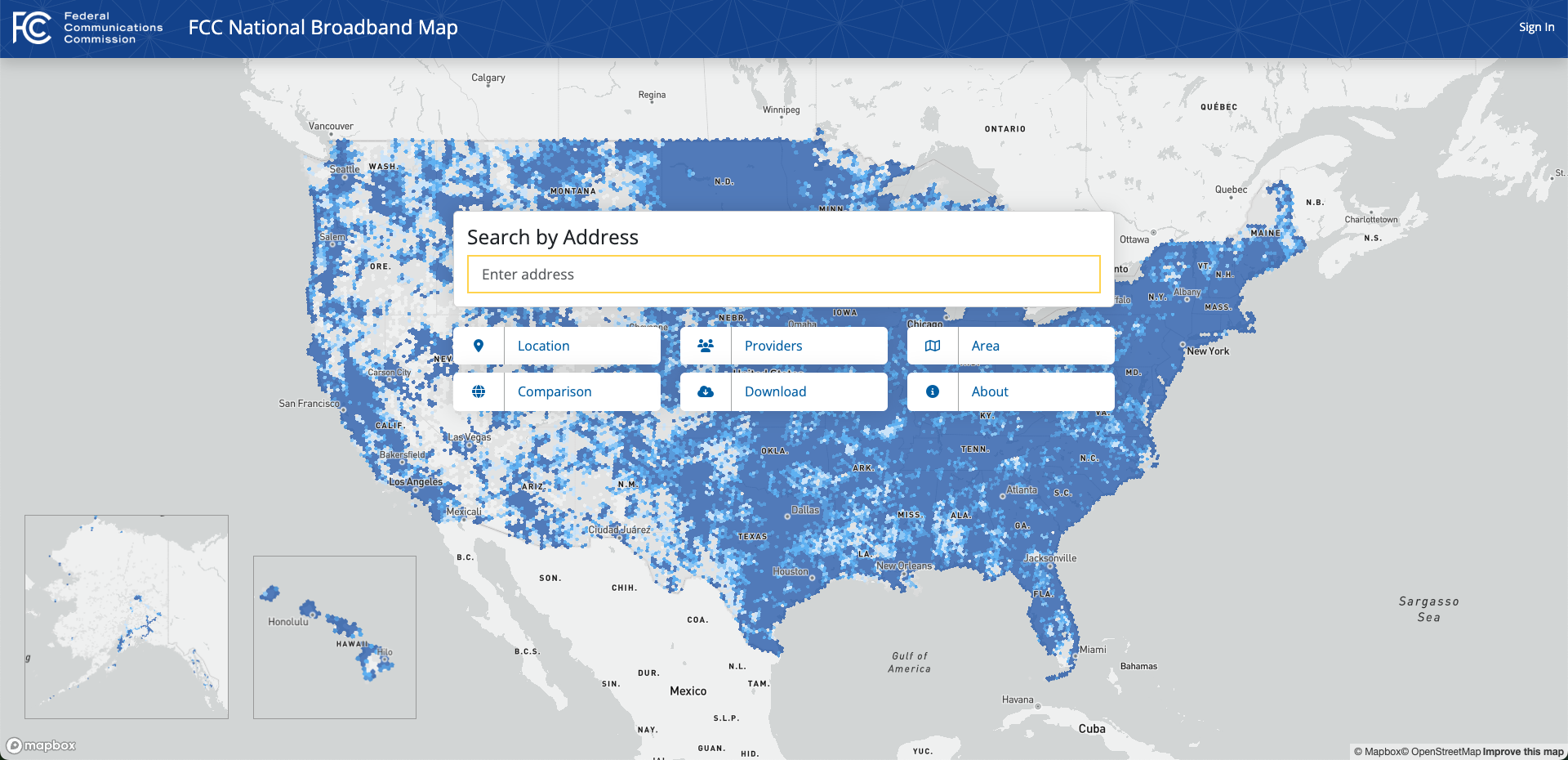
The FCC National Broadband Map is a free, publicly-available tool that depicts wireless coverage (down to the street-level address) anywhere in the United States.
San Cristobal, New Mexico Cell Tower Victory Draws Growing Media Attention
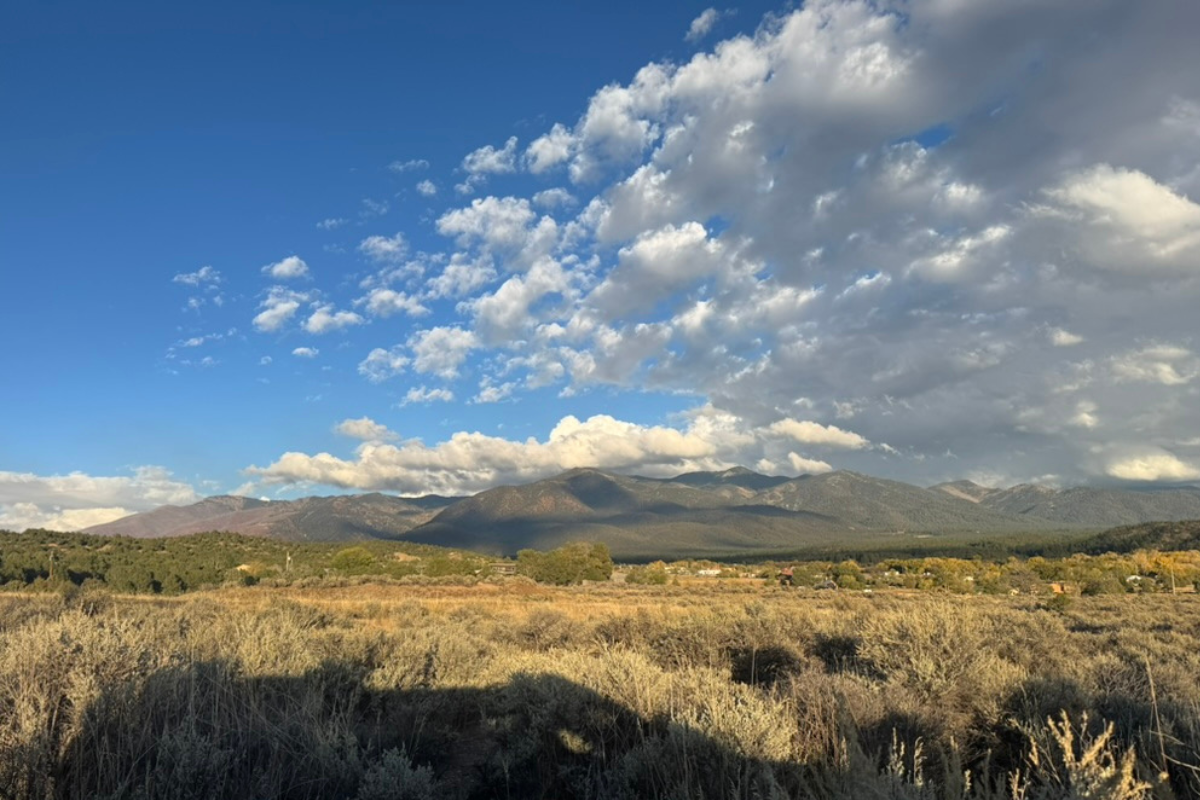
The area near the proposed 195-foot cell tower in San Cristobal, New Mexico. Photo taken on October 14, 2025.
Journalist and researcher Suzanne Burdick, PhD of The Defender published a powerful piece highlighting our latest success: the defeat of a proposed 195-foot cell tower in San Cristobal, New Mexico.
This victory, made possible because of a spectacularly dedicated, highly organized group of local residents, protects a truly pristine landscape from industrial intrusion. The proposed tower would have permanently altered the enchanted character of the San Cristobal Valley, devalued property values, marred scenic views, and irreversibly damaged wildlife.
We’re proud to see this important win gaining national attention. The Defender’s coverage not only underscores the significance of protecting rural communities from unchecked infrastructure development, but it also amplifies the voices of those fighting for environmental integrity and local sovereignty.
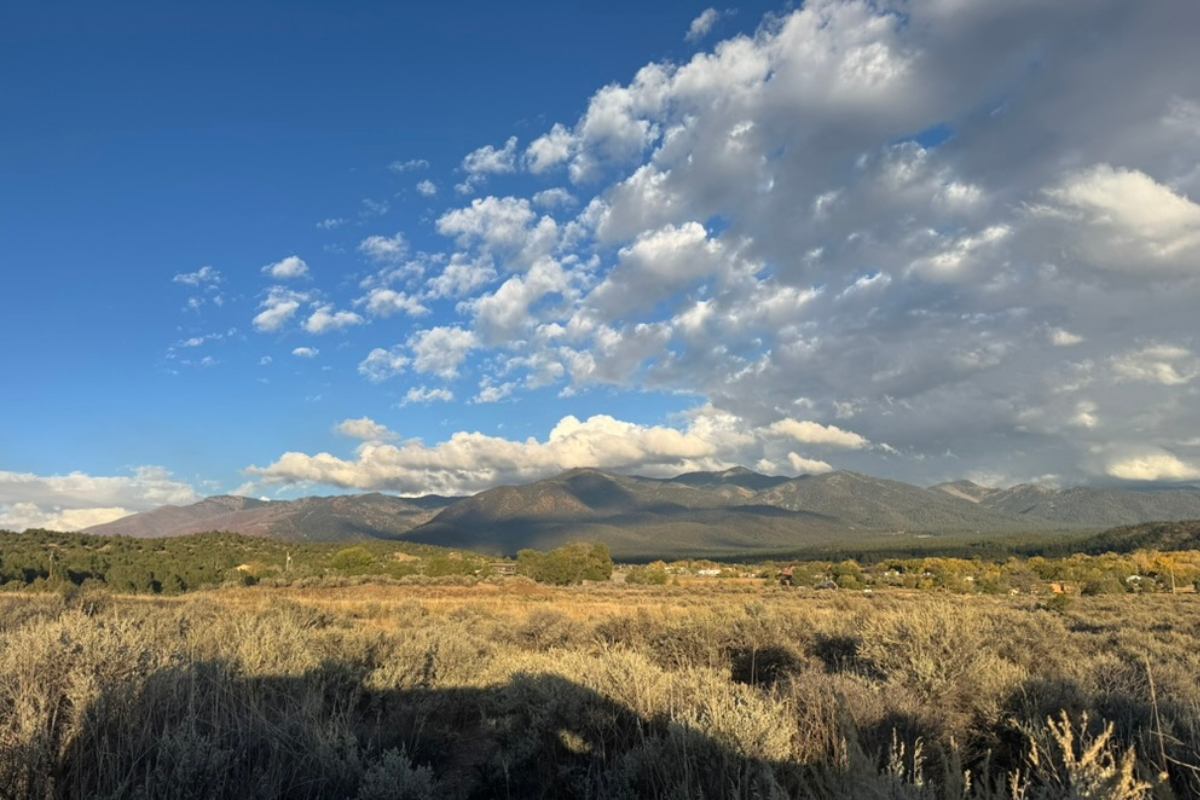
Photo of San Cristobal, New Mexico near the proposed cell tower installation site. Photo taken on October 14, 2025.

Ridiculous 195-Foot Cell Tower Proposal Defeated in San Cristobal, NM
On October 15, 2025, after a seven hour appeal/de novo hearing before the Taos County Board of Commissioners, the Commissioners overturned the Taos County Planning Commission's decision granting a permit for a horrific 195-foot tall macro tower that would have despoiled one of the most pristine, beautiful valleys remaining in New Mexico. This was a very gratifying win for the Robert J. Berg legal team and the remarkable, tiny community of San Cristobal, NM which mobilized all their resources over an extremely short time span.
After a seven-hour appeal/de novo hearing, the Robert J. Berg legal team, Dr. Kent Chamberlin, and the San Cristobal community came together to successfully protect one of the most pristine, beautiful valleys remaining in New Mexico.
Read about our latest legal victory in the Taos News here!